
Practical Thoughts from Years Guiding Elk & Moose Hunts in British Columbia
Hunters spend countless hours debating calibers, scopes, and rifle setups online. After years guiding mountain hunts in British Columbia, I can honestly say that most hunters would be far better served focusing on simplicity, reliability, and practical shooting ability than chasing extreme magnums or long-range trends.
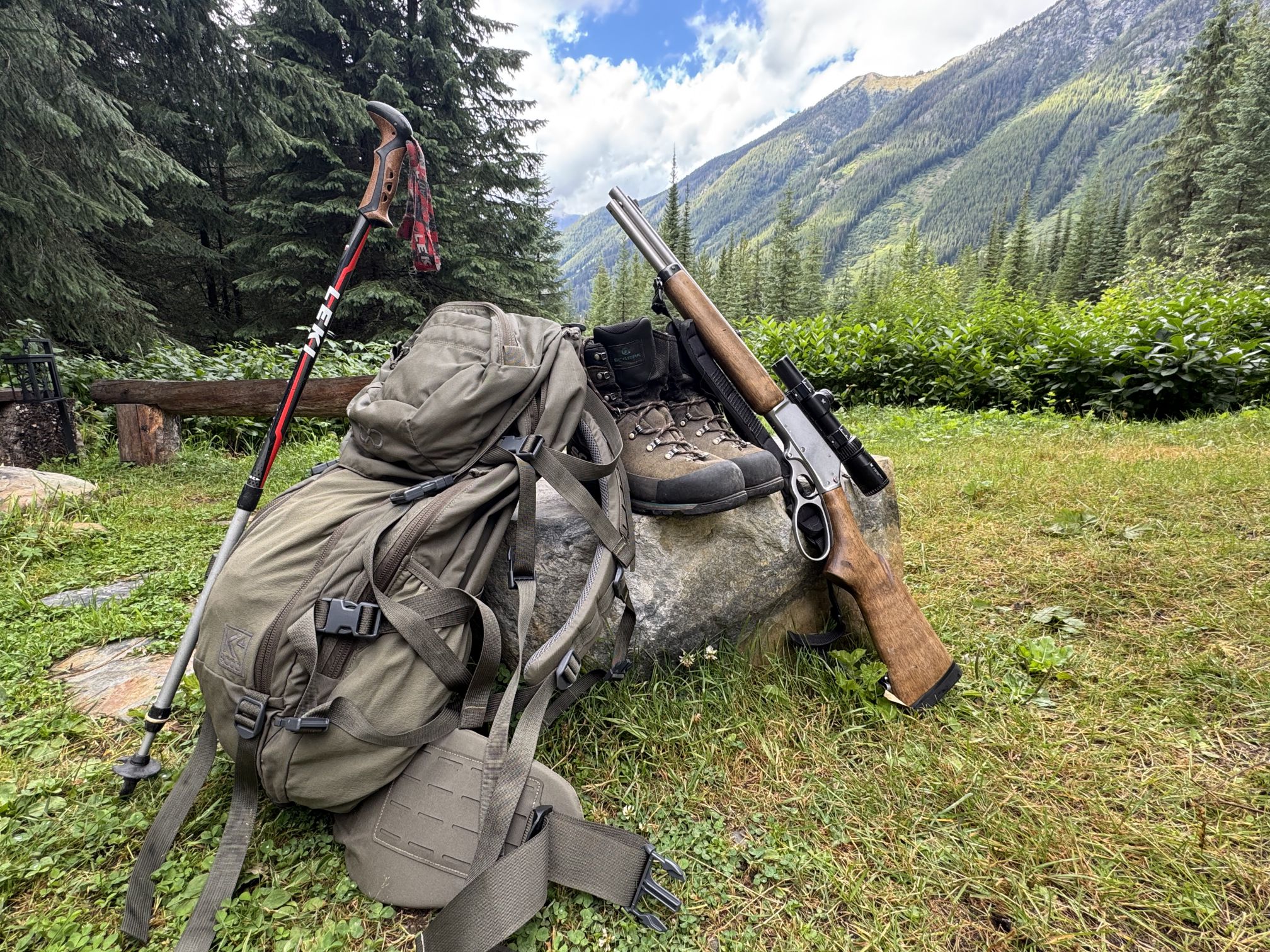
Mountain hunting is already difficult enough. The terrain is steep, weather changes quickly, shots happen fast, and opportunities are often brief. Your rifle system should reduce problems, not create them.
The best mountain hunting rifles are usually fairly simple:
- dependable
- weather resistant
- reasonably lightweight
- easy to carry
- familiar to the shooter
Not tactical science projects.
Most Hunters Shoot Moderate Calibers Better
This is probably the biggest thing we see in camp.
A hunter will own two rifles. One is usually something like a .270, .308, or .30-06. The other is a larger magnum rifle — often a .300 Winchester Magnum.
When I ask which rifle they actually enjoy shooting more and shoot better with, the answer is almost always the smaller caliber.
I tell them to bring that rifle.
The reality is that most hunters simply do not shoot heavy magnums very well. A .300 Win Mag absolutely has major hitting power, and there are certainly hunters who handle them extremely well. Usually bigger-framed guys who shoot regularly and are comfortable with recoil. For that small percentage of hunters, they can work great.
But for most hunters, large magnums create more problems than advantages.
They recoil hard. Hunters don’t enjoy practicing with them. As a result, they don’t shoot enough at the range, and eventually many develop a flinch without even realizing it.
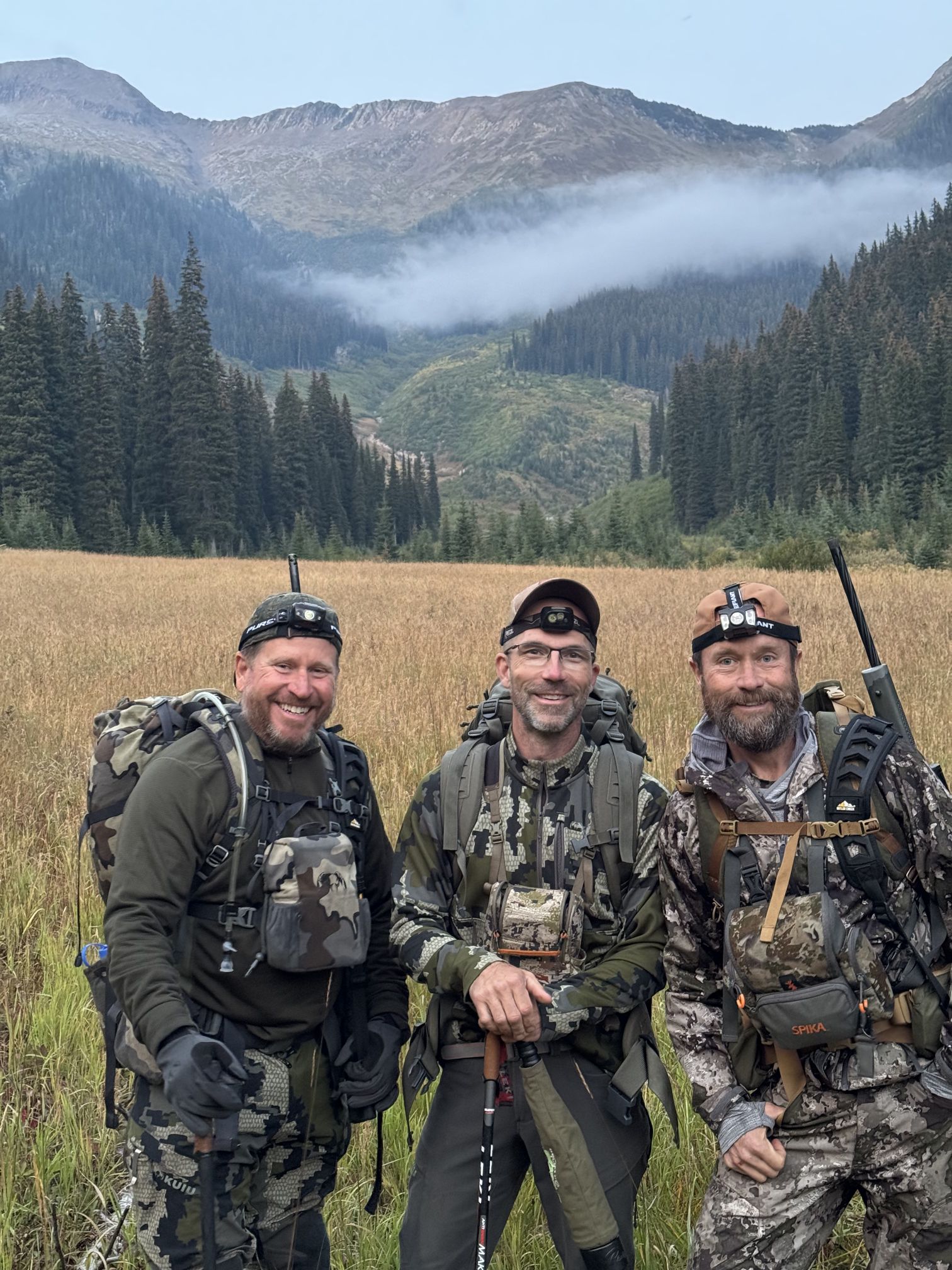
Meanwhile, a hunter carrying a .270 or .30-06 that he shoots confidently and practices with regularly is often far more effective in the mountains.
Our Preferred Calibers for Elk & Moose
For practical mountain hunting, we consistently see good performance from calibers like:
- .270 Winchester
- .308 Winchester
- .30-06 Springfield
- 7mm Remington Magnum
- .300 Winchester Magnum (for hunters who genuinely shoot them well)
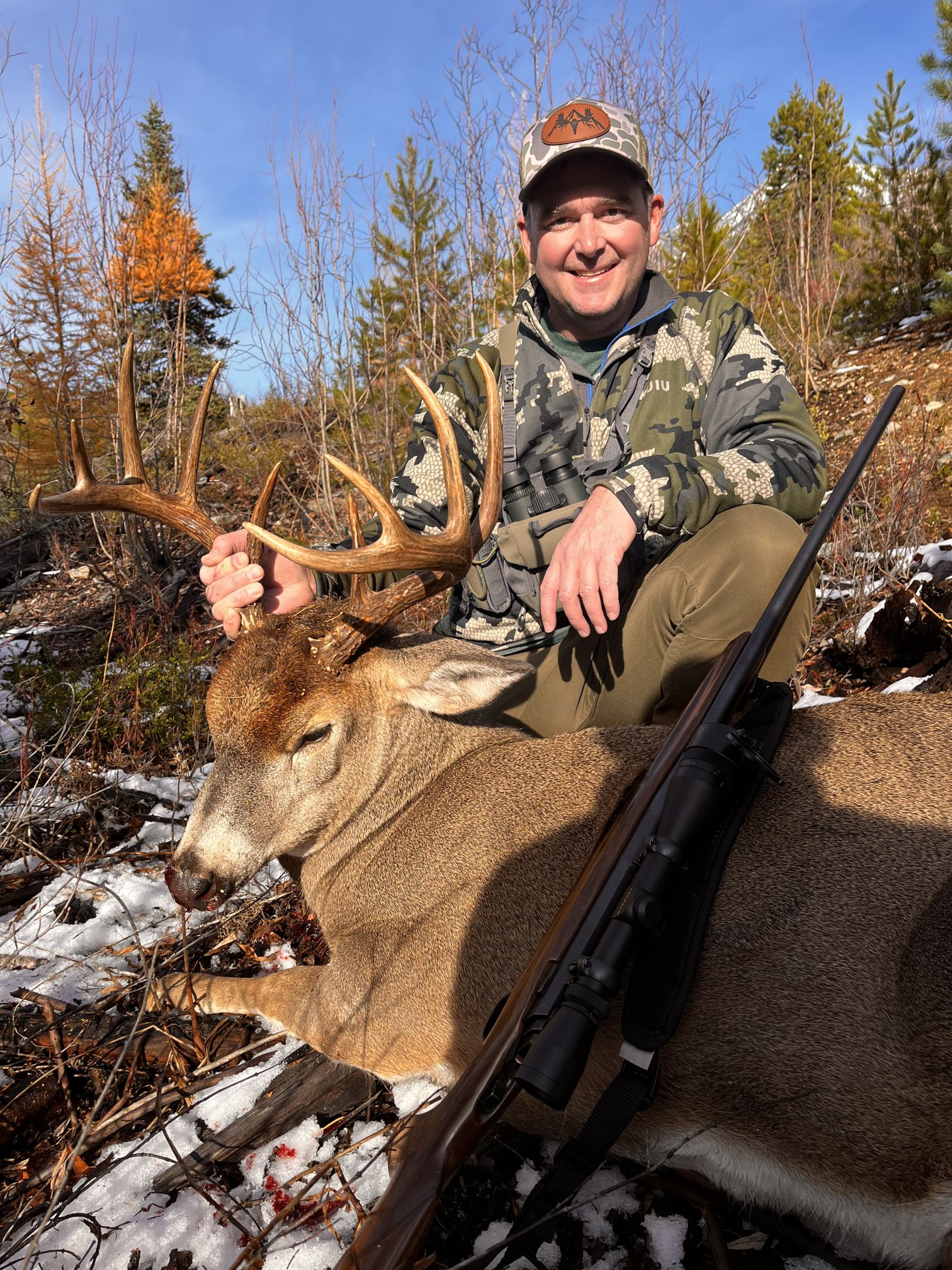
There’s no magic here. Good shot placement and bullet performance matter far more than internet debates over velocity and energy charts.
One thing I will say clearly: despite their popularity online, we have not found the 6.5 Creedmoor ideal for large-bodied elk and moose in real mountain hunting situations. They may work adequately on lighter game and under controlled conditions, but on heavy animals in steep country, we simply prefer more authority and margin for error.
That opinion won’t agree with every internet discussion, but it comes from guided field experience, not ballistic charts.
Stainless & Synthetic Is Hard to Beat
Mountain hunts are hard on equipment.
Rifles get:
- wet
- muddy
- scratched
- bounced around on horses
- packed through thick timber
- leaned against rocks and trees
A stainless steel rifle with a synthetic stock is hard to beat for this style of hunting.
A hunting rifle should absolutely be cared for properly, but it also shouldn’t feel like a museum piece you’re afraid to use. Some of the best hunters we guide every year show up with fairly simple rifles that already have a few scars on them.
The rifle feels familiar, trusted, and proven. That matters.
Muzzle Brakes Have Become a Major Problem
In the last few years, we’ve seen more and more hunters arrive with muzzle brakes installed — even on relatively mild calibers like .270s.
Personally, I’m not a fan of them for mountain hunting.
Yes, they reduce recoil, but they also create serious downsides:
- tremendous noise
- hearing damage risk
- concussion for guides and hunting partners
- communication issues after the shot
As guides, we are often trying to watch the impact through binoculars and immediately assess whether a follow-up shot is needed. With a heavy muzzle brake going off beside you, you sometimes end up plugging your ears instead of watching the animal.
That’s not ideal during a critical moment.
I’ve also seen plenty of hunters develop poor habits around muzzle brakes because they become dependent on them instead of learning to shoot manageable rifles comfortably.
Forget the Long-Range Fantasy
This is another area where internet culture has drifted away from practical mountain hunting.
We constantly hear:
“I can shoot 1,000 yards.”
In reality, many hunters struggle to consistently shoot well at 200 yards from field positions.
Mountain hunting is not target shooting.
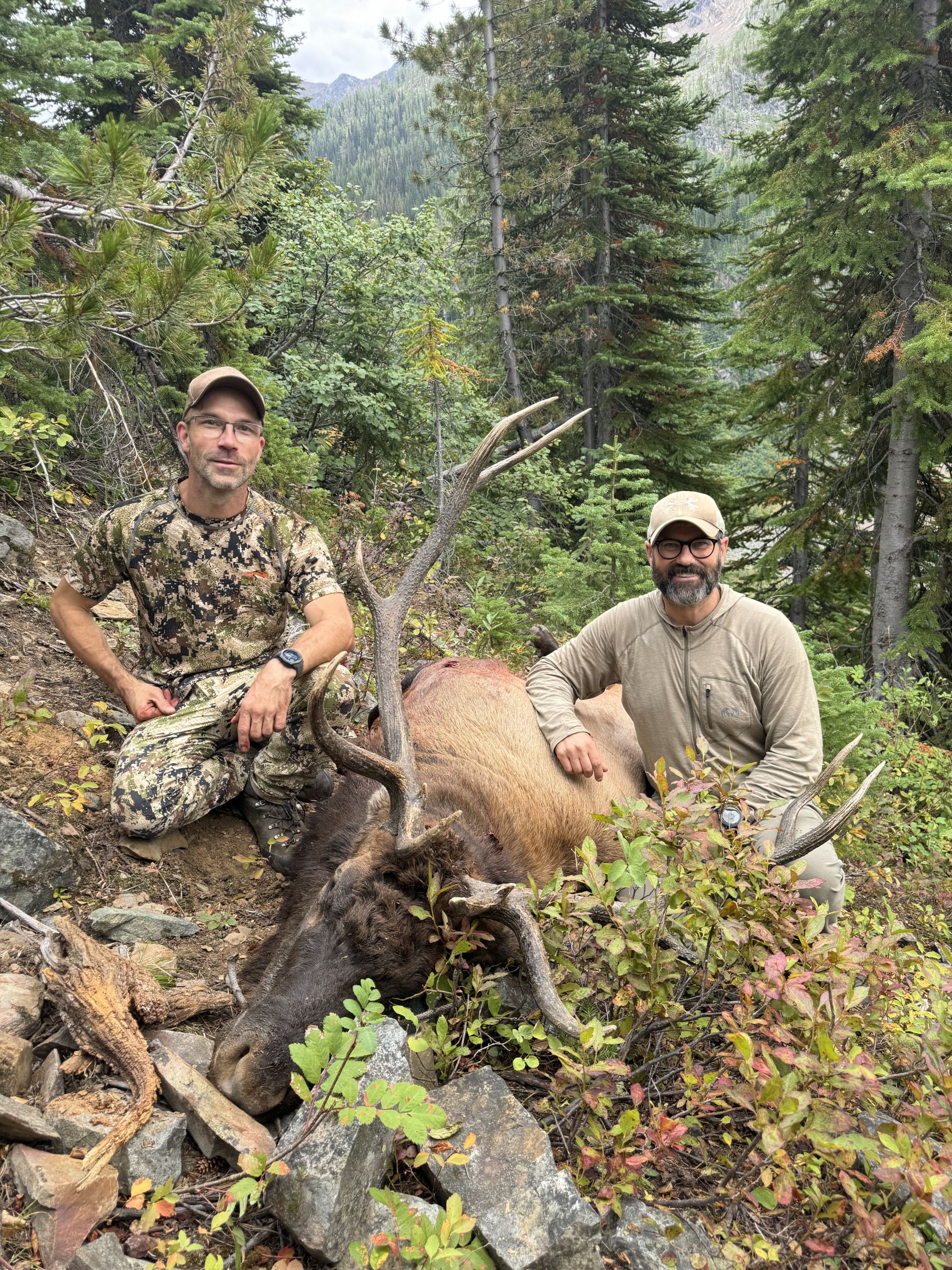
Our goal as guides is always to get as close as reasonably possible. Good woodsmanship, patience, terrain, and stalking skill matter far more than dialing turrets and attempting extreme shots.
It’s actually uncommon for us to be unable to get inside 200 yards on elk or moose.
We’re hunters — not filming the movie Sniper.
Keep Scope Setups Simple
A good-quality hunting scope is important. But again, simplicity wins.
For most mountain hunting situations:
- a quality 3–9x
- or a 4–12x scope
is more than enough.
Personally, I’m not a fan of overly complicated scope systems with dial turrets, click adjustments, giant objective lenses, and heavily cluttered reticles.
We’ve honestly never seen those systems become a real advantage during actual guided elk or moose hunts. More often, they create confusion, slow hunters down, or encourage people to focus on distance instead of getting closer.
A normal duplex reticle and a dependable scope from a reputable company will handle virtually every realistic mountain hunting situation.
Heavy Rifles Become Miserable in the Mountains
Heavy rifles can feel wonderful at the range.
They’re stable. Recoil is reduced. Everything feels controlled.
Then Day 4 of a mountain hunt arrives.
After climbing, sidehilling, crawling through deadfall, and carrying that rifle all day long, heavy rifles suddenly become far less appealing.
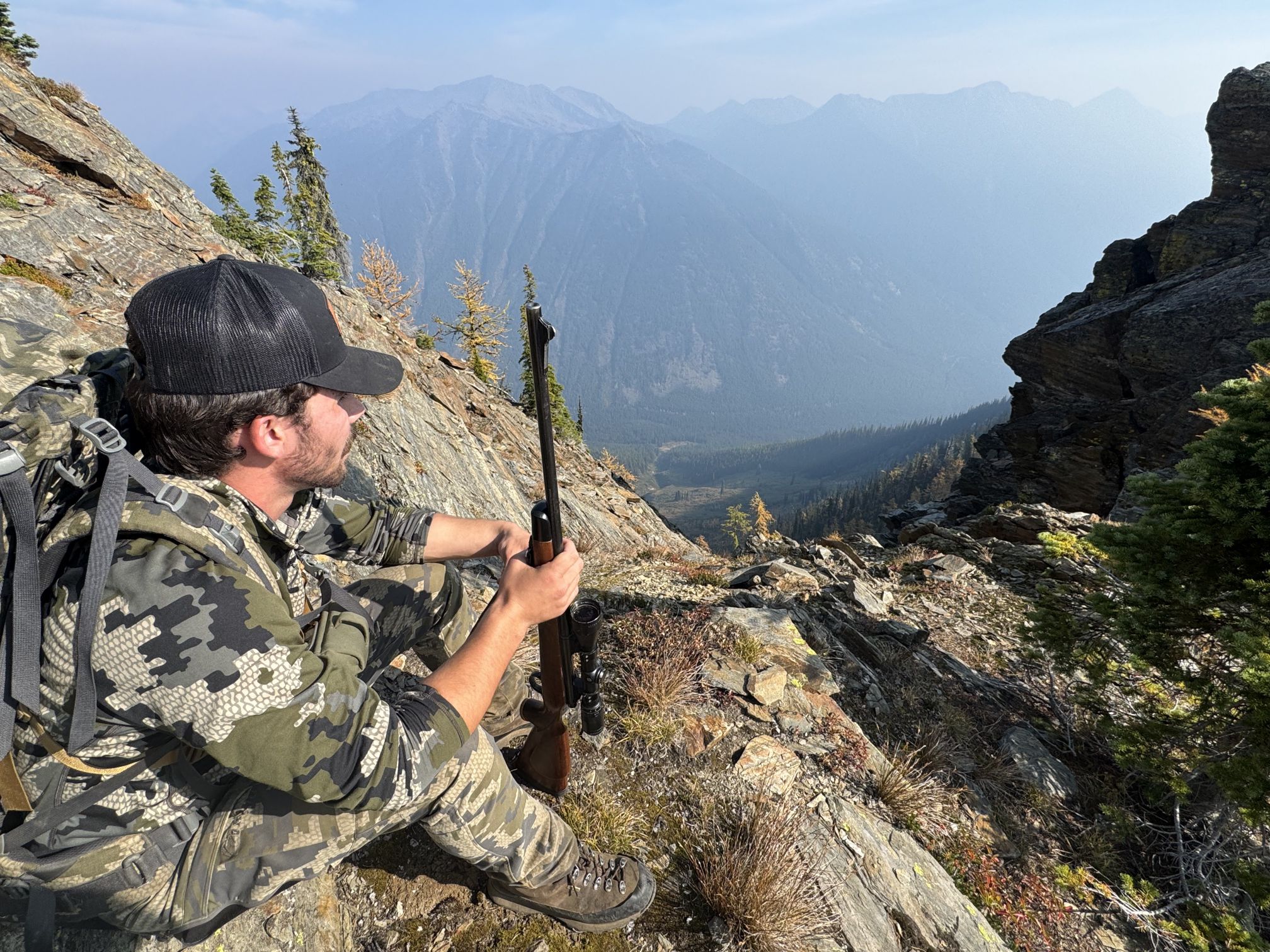
Mountain rifles should balance portability with shootability. Extremely ultralight rifles can become difficult for some hunters to shoot accurately, but excessively heavy setups are equally problematic.
Again, practical balance matters more than extremes
Bipods & Shooting Sticks
This one may surprise some people.
Personally, I’m not a huge fan of bulky bipods for most elk and moose hunts. They add weight and bulk, and prone shooting positions are actually less common in steep mountain terrain than many hunters expect.
There are some lightweight magnetic or quick-detach styles that are fairly slick, but giant permanently attached bipods usually aren’t necessary for normal mountain hunting distances.
Shooting sticks are another item we’ve seen create more problems than benefits in many elk camps.
They:
- clang around
- make noise
- snag on brush
- take time to deploy
- spook animals surprisingly often
For sheep or goat hunts they may occasionally make more sense, but for typical elk and moose hunting, we generally prefer simpler field shooting positions.
Practice Realistic Shooting Positions
One of the best things hunters can do before a mountain hunt is practice realistic field shooting positions instead of only shooting from a bench.
Practice:
- sitting
- kneeling
- leaning against trees
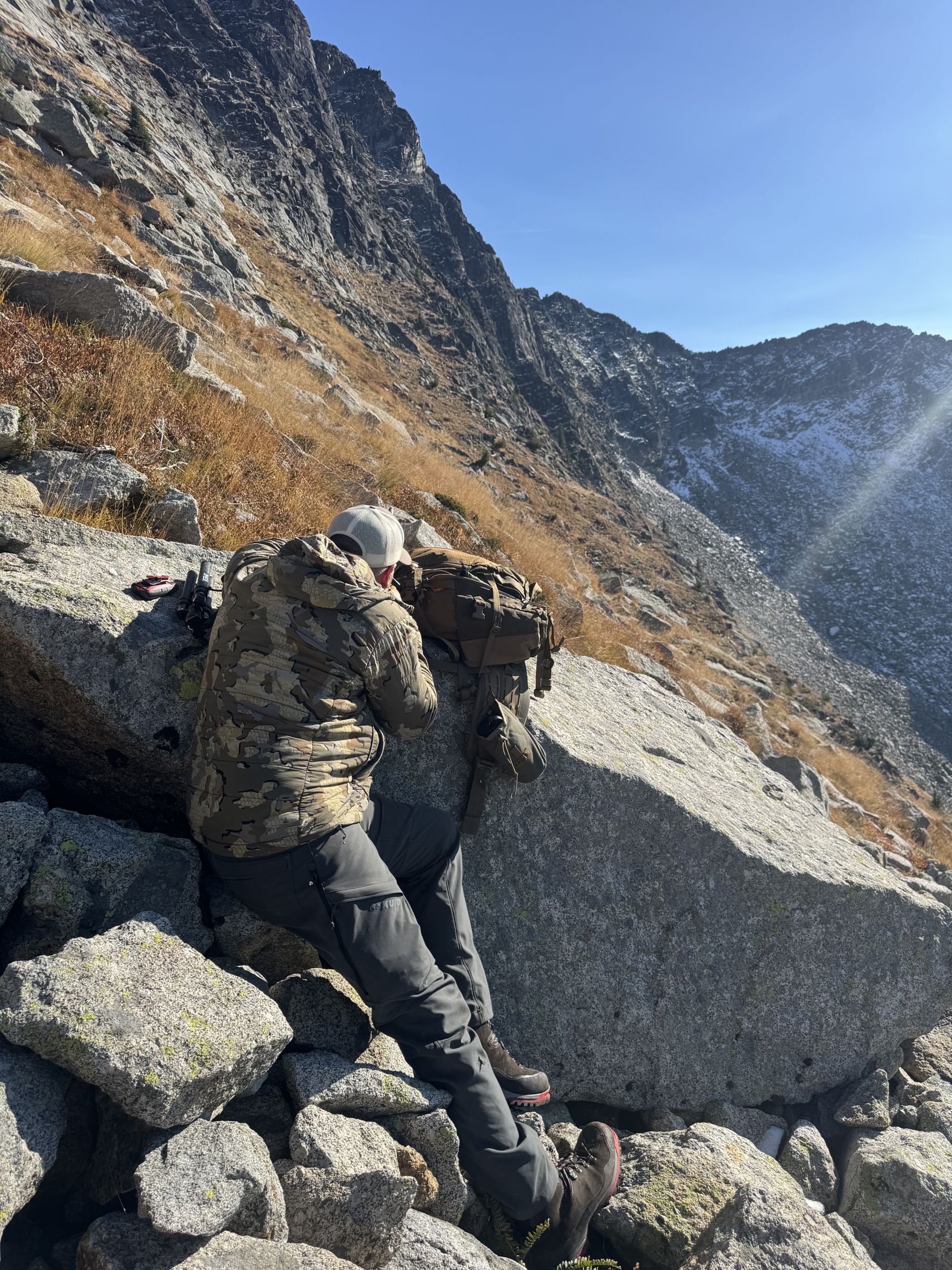
- using backpacks as rests
- quick shooting setups
- uneven terrain
In the mountains, perfect prone shooting opportunities are actually fairly uncommon. There’s usually brush, rocks, steep angles, deadfall, or uneven ground involved.
The hunters who perform best are usually the ones who have practiced practical field shooting under realistic conditions.
Check Your Scope Rings
This sounds simple, but we’ve actually seen it cause major problems.
Every year or two we end up chasing a rifle’s zero around the target for hours before finally discovering loose scope rings or mounting screws.
Just because you can’t physically twist the scope with your hands doesn’t necessarily mean everything is properly tightened.
Before your hunt:
- check your rings
- check action screws
- verify zero
- shoot the rifle after travel
You’d be surprised how many problems this prevents.
Learn How to Carry Your Rifle Properly
This is another thing hunters often underestimate.
A poor rifle carry setup becomes frustrating fast during a mountain hunt.
A good sling matters. Learning how your rifle interacts with your backpack matters. Hunters should spend time hiking before the hunt with their actual rifle and pack setup.
You don’t want to spend your entire hunt fighting your rifle system while climbing through steep terrain.
The Best Hunting Rifles Usually Feel Boring
That may sound strange, but it’s true.
The best hunting rifles are usually:
- simple
- dependable
- familiar
- predictable
Nothing fancy.
No complicated systems. No giant optics. No unnecessary gadgets.
Just a rifle the hunter trusts completely and can shoot confidently under pressure.
At the end of the day, mountain hunting success still comes down to:
- woodsmanship
- getting close
- practical shooting ability
- familiarity with your equipment
- and staying calm when the opportunity finally comes together.
Simple rifles carried by confident hunters still kill a tremendous number of elk and moose every fall.